Occupation Summary

Tax Examiners and Collectors, and Revenue Agents

O*NET 13-2081.00

Description:

Determine tax liability or collect taxes from individuals or business firms according to prescribed laws and regulations.

Annual Wages:
$65,513.00
Employment Rate:
Employment is expected to increase by 5.44%.
Education Level:
Bachelor's Degree. According to O*Net, the majority of people employed in this occupation have this level of education.
Endorsement:
Business and Industry

  1. Collect taxes from individuals or businesses according to prescribed laws and regulations.
  2. Maintain knowledge of tax code changes, and of accounting procedures and theory to properly evaluate financial information.
  3. Maintain records for each case, including contacts, telephone numbers, and actions taken.
  4. Confer with taxpayers or their representatives to discuss the issues, laws, and regulations involved in returns, and to resolve problems with returns.
  5. Contact taxpayers by mail or telephone to address discrepancies and to request supporting documentation.
  6. Send notices to taxpayers when accounts are delinquent.
  7. Notify taxpayers of any overpayment or underpayment, and either issue a refund or request further payment.
  8. Review filed tax returns to determine whether claimed tax credits and deductions are allowed by law.
  9. Review selected tax returns to determine the nature and extent of audits to be performed on them.
  10. Enter tax return information into computers for processing.
  11. Examine accounting systems and records to determine whether accounting methods used were appropriate and in compliance with statutory provisions.
  12. Impose payment deadlines on delinquent taxpayers and monitor payments to ensure that deadlines are met.
  13. Check tax forms to verify that names and taxpayer identification numbers are correct, that computations have been performed correctly, or that amounts match those on supporting documentation.
  14. Examine and analyze tax assets and liabilities to determine resolution of delinquent tax problems.
  15. Determine appropriate methods of debt settlement, such as offers of compromise, wage garnishment, or seizure and sale of property.
  16. Secure a taxpayer's agreement to discharge a tax assessment or submit contested determinations to other administrative or judicial conferees for appeals hearings.
  17. Prepare briefs and assist in searching and seizing records to prepare charges and documentation for court cases.
  18. Direct service of legal documents, such as subpoenas, warrants, notices of assessment, and garnishments.
  19. Investigate claims of inability to pay taxes by researching court information for the status of liens, mortgages, or financial statements, or by locating assets through third parties.
  20. Participate in informal appeals hearings on contested cases from other agents.
  21. Answer questions from taxpayers and assist them in completing tax forms.


No Industry Employment Patterns found.

Labor Market Information


2024 Statewide average hourly wage $31.50
2024 National average hourly wage $32.49
2022 National employment 55,000
2022 Texas employment 3,804
Texas projected employment by 2032 4,011
Texas projected annual employment and Turnover openings through 2032 309


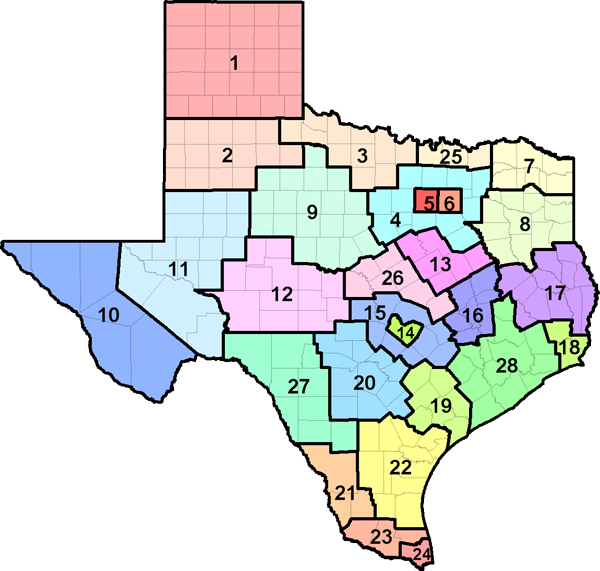
TEXAS COUNTY MAP BY WORKFORCE DEVELOPMENT AREA
* Due to confidentiality rules, not all regions may have the data displayed. The sum of all the regions may not be equal to the state total.


Top 10 Relevant Knowledge Areas Relevant Importance Levels
Customer and Personal Service
Knowledge of principles and processes for providing customer and personal services. This includes customer needs assessment, meeting quality standards for services, and evaluation of customer satisfaction.
86.00%
English Language
Knowledge of the structure and content of the English language including the meaning and spelling of words, rules of composition, and grammar.
81.80%
Mathematics
Knowledge of arithmetic, algebra, geometry, calculus, statistics, and their applications.
77.60%
Administrative
Knowledge of administrative and office procedures and systems such as word processing, managing files and records, stenography and transcription, designing forms, and workplace terminology.
77.20%
Law and Government
Knowledge of laws, legal codes, court procedures, precedents, government regulations, executive orders, agency rules, and the democratic political process.
74.20%
Economics and Accounting
Knowledge of economic and accounting principles and practices, the financial markets, banking, and the analysis and reporting of financial data.
69.40%
Administration and Management
Knowledge of business and management principles involved in strategic planning, resource allocation, human resources modeling, leadership technique, production methods, and coordination of people and resources.
68.40%
Computers and Electronics
Knowledge of circuit boards, processors, chips, electronic equipment, and computer hardware and software, including applications and programming.
52.00%
Education and Training
Knowledge of principles and methods for curriculum and training design, teaching and instruction for individuals and groups, and the measurement of training effects.
51.00%
Psychology
Knowledge of human behavior and performance; individual differences in ability, personality, and interests; learning and motivation; psychological research methods; and the assessment and treatment of behavioral and affective disorders.
49.60%


Top 10 Relevant Skill Areas Relevant Importance Levels
Reading Comprehension
Understanding written sentences and paragraphs in work-related documents.
80.00%
Active Listening
Giving full attention to what other people are saying, taking time to understand the points being made, asking questions as appropriate, and not interrupting at inappropriate times.
80.00%
Speaking
Talking to others to convey information effectively.
80.00%
Critical Thinking
Using logic and reasoning to identify the strengths and weaknesses of alternative solutions, conclusions, or approaches to problems.
77.60%
Active Learning
Understanding the implications of new information for both current and future problem-solving and decision-making.
65.00%
Mathematics
Using mathematics to solve problems.
65.00%
Writing
Communicating effectively in writing as appropriate for the needs of the audience.
65.00%
Monitoring
Monitoring/Assessing performance of yourself, other individuals, or organizations to make improvements or take corrective action.
65.00%
Judgment and Decision Making
Considering the relative costs and benefits of potential actions to choose the most appropriate one.
62.40%
Time Management
Managing one's own time and the time of others.
60.00%


Top 10 Relevant Abilities Relevant Importance Levels
Deductive Reasoning
The ability to apply general rules to specific problems to produce answers that make sense.
80.00%
Inductive Reasoning
The ability to combine pieces of information to form general rules or conclusions (includes finding a relationship among seemingly unrelated events).
80.00%
Information Ordering
The ability to arrange things or actions in a certain order or pattern according to a specific rule or set of rules (e.g., patterns of numbers, letters, words, pictures, mathematical operations).
80.00%
Oral Comprehension
The ability to listen to and understand information and ideas presented through spoken words and sentences.
80.00%
Written Comprehension
The ability to read and understand information and ideas presented in writing.
80.00%
Oral Expression
The ability to communicate information and ideas in speaking so others will understand.
80.00%
Problem Sensitivity
The ability to tell when something is wrong or is likely to go wrong. It does not involve solving the problem, only recognizing that there is a problem.
77.60%
Near Vision
The ability to see details at close range (within a few feet of the observer).
75.00%
Speech Recognition
The ability to identify and understand the speech of another person.
75.00%
Speech Clarity
The ability to speak clearly so others can understand you.
75.00%


  • Communicating with People Outside the Organization
    -- Communicating with people outside the organization, representing the organization to customers, the public, government, and other external sources. This information can be exchanged in person, in writing, or by telephone or e-mail.
  • Working with Computers
    -- Using computers and computer systems (including hardware and software) to program, write software, set up functions, enter data, or process information.
  • Performing for or Working Directly with the Public
    -- Performing for people or dealing directly with the public. This includes serving customers in restaurants and stores, and receiving clients or guests.
  • Getting Information
    -- Observing, receiving, and otherwise obtaining information from all relevant sources.
  • Evaluating Information to Determine Compliance with Standards
    -- Using relevant information and individual judgment to determine whether events or processes comply with laws, regulations, or standards.
Other Activities


  • Achievement
    - Occupations that satisfy this work value are results oriented and allow employees to use their strongest abilities, giving them a feeling of accomplishment. Corresponding needs are Ability Utilization and Achievement.
  • Support
    - Occupations that satisfy this work value offer supportive management that stands behind employees. Corresponding needs are Company Policies, Supervision: Human Relations and Supervision: Technical.


Tools

Desktop calculator: 10-key calculators;

Desktop computers: Desktop computers;

Laser printers: Computer laser printers;

Notebook computers: Laptop computers;

Personal computers: Personal computers;

Photocopiers: Photocopiers;

Scanners: Computer scanners;

Special purpose telephones: Multi-line telephone systems;


Technology

Accounting software: Automated tax system software; Fund accounting software; Intuit QuickBooks; Tax software;

Compliance software: Tax compliance property tax management software;

Data base user interface and query software: Online databases; Microsoft Access;

Document management software: Document management system software;

Electronic mail software: Email software; Microsoft Outlook;

Enterprise resource planning ERP software: SAP software;

Graphics or photo imaging software: Image processing systems;

Human resources software: ADP Workforce Now;

Internet browser software: Web browser software;

Office suite software: Microsoft Office software;

Optical character reader OCR or scanning software: Optical character recognition OCR software;

Presentation software: Microsoft PowerPoint;

Spreadsheet software: Microsoft Excel;

Tax preparation software: Intuit TurboTax;

Word processing software: Microsoft Word;


Related O*NET occupational titles for Tax Examiners and Collectors, and Revenue Agents include:
  • 13-2011.00 Accountants and Auditors
  • 43-3011.00 Bill and Account Collectors
  • 43-3021.00 Billing and Posting Clerks
  • 43-3031.00 Bookkeeping, Accounting, and Auditing Clerks
  • 13-2031.00 Budget Analysts
  • 43-4041.00 Credit Authorizers, Checkers, and Clerks
  • 43-4061.00 Eligibility Interviewers, Government Programs
  • 13-2061.00 Financial Examiners
  • 43-3051.00 Payroll and Timekeeping Clerks
  • 13-2082.00 Tax Preparers


Sources of Additional Information
  • For more information about careers with your state or local government, contact the appropriate office of taxation.
  • For more information about careers at the Internal Revenue Service (IRS), visit: IRS Careers
  • For more information about Office of Personnel Management (OPM) requirements for the federal accounting and budget occupational series, which includes tax-related occupations, visit: U.S. Office of Personnel Management (OPM)
  • Tax Examiners and Collectors, and Revenue Agents

  • Contact Texas Workforce Commission
    Labor Market and Career Information  |  101 E. 15th Street, Annex Room 0252  |  Austin, Texas 78778
    Official Website  |  1-800-822-PLAN (7526)  |  512.936.3200

    ** The information in this report may be derived from many sources like O*NET, BLS (Bureau of Labor Statistics), OOH (Occupational Outlook Handbook), and Career One Stop.