Occupation Summary

Biologists

O*NET 19-1029.04

Description:

Research or study basic principles of plant and animal life, such as origin, relationship, development, anatomy, and functions.

Annual Wages:
$90,184.00
Employment Rate:
Employment is expected to increase by 14.66%.
Education Level:
Master's Degree. According to O*Net, the majority of people employed in this occupation have this level of education.
Endorsement:
STEM

  1. Develop and maintain liaisons and effective working relations with groups and individuals, agencies, and the public to encourage cooperative management strategies or to develop information and interpret findings.
  2. Program and use computers to store, process, and analyze data.
  3. Collect and analyze biological data about relationships among and between organisms and their environment.
  4. Study aquatic plants and animals and environmental conditions affecting them, such as radioactivity or pollution.
  5. Communicate test results to state and federal representatives and general public.
  6. Identify, classify, and study structure, behavior, ecology, physiology, nutrition, culture, and distribution of plant and animal species.
  7. Represent employer in a technical capacity at conferences.
  8. Plan and administer biological research programs for government, research firms, medical industries, or manufacturing firms.
  9. Research environmental effects of present and potential uses of land and water areas, determining methods of improving environmental conditions or such outputs as crop yields.
  10. Measure salinity, acidity, light, oxygen content, and other physical conditions of water to determine their relationship to aquatic life.
  11. Teach or supervise students and perform research at universities and colleges.
  12. Supervise biological technicians and technologists and other scientists.
  13. Study basic principles of plant and animal life, such as origin, relationship, development, anatomy, and function.
  14. Study and manage wild animal populations.
  15. Prepare requests for proposals or statements of work.
  16. Prepare plans for management of renewable resources.
  17. Develop methods and apparatus for securing representative plant, animal, aquatic, or soil samples.
  18. Develop pest management and control measures, and conduct risk assessments related to pest exclusion, using scientific methods.
  19. Prepare technical and research reports, such as environmental impact reports, and communicate the results to individuals in industry, government, or the general public.
  20. Review reports and proposals, such as those relating to land use classifications and recreational development, for accuracy, adequacy, or adherence to policies, regulations, or scientific standards.
  21. Write grant proposals to obtain funding for biological research.

Watch a video about Biologists

Career videos are provided by: CareerOneStop.org


National Industry Employment Patterns


Industry % of Biologists employed Annual Growth Rate
Scientific research and development services 28.7 0.62
Colleges, universities, and professional schools 10.2 0.32
Management, scientific, and technical consulting services 5.6 0.85
Pharmaceutical and medicine manufacturing 4.6 0.69


Labor Market Information


2024 Statewide average hourly wage $43.36
2024 National average hourly wage $48.29
2022 National employment 60,400
2022 Texas employment 2,135
Texas projected employment by 2032 2,448
Texas projected annual employment and Turnover openings through 2032 196


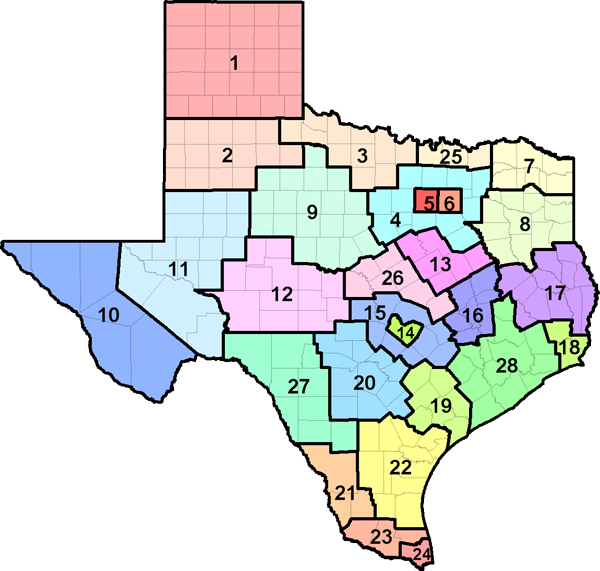
TEXAS COUNTY MAP BY WORKFORCE DEVELOPMENT AREA
* Due to confidentiality rules, not all regions may have the data displayed. The sum of all the regions may not be equal to the state total.


Top 10 Relevant Knowledge Areas Relevant Importance Levels
Biology
Knowledge of plant and animal organisms, their tissues, cells, functions, interdependencies, and interactions with each other and the environment.
95.80%
English Language
Knowledge of the structure and content of the English language including the meaning and spelling of words, rules of composition, and grammar.
84.00%
Mathematics
Knowledge of arithmetic, algebra, geometry, calculus, statistics, and their applications.
80.40%
Chemistry
Knowledge of the chemical composition, structure, and properties of substances and of the chemical processes and transformations that they undergo. This includes uses of chemicals and their interactions, danger signs, production techniques, and disposal methods.
69.40%
Law and Government
Knowledge of laws, legal codes, court procedures, precedents, government regulations, executive orders, agency rules, and the democratic political process.
69.20%
Administration and Management
Knowledge of business and management principles involved in strategic planning, resource allocation, human resources modeling, leadership technique, production methods, and coordination of people and resources.
67.80%
Customer and Personal Service
Knowledge of principles and processes for providing customer and personal services. This includes customer needs assessment, meeting quality standards for services, and evaluation of customer satisfaction.
65.80%
Computers and Electronics
Knowledge of circuit boards, processors, chips, electronic equipment, and computer hardware and software, including applications and programming.
63.80%
Geography
Knowledge of principles and methods for describing the features of land, sea, and air masses, including their physical characteristics, locations, interrelationships, and distribution of plant, animal, and human life.
63.00%
Administrative
Knowledge of administrative and office procedures and systems such as word processing, managing files and records, stenography and transcription, designing forms, and workplace terminology.
62.40%


Top 10 Relevant Skill Areas Relevant Importance Levels
Science
Using scientific rules and methods to solve problems.
92.40%
Critical Thinking
Using logic and reasoning to identify the strengths and weaknesses of alternative solutions, conclusions, or approaches to problems.
80.00%
Reading Comprehension
Understanding written sentences and paragraphs in work-related documents.
80.00%
Active Listening
Giving full attention to what other people are saying, taking time to understand the points being made, asking questions as appropriate, and not interrupting at inappropriate times.
80.00%
Writing
Communicating effectively in writing as appropriate for the needs of the audience.
80.00%
Speaking
Talking to others to convey information effectively.
80.00%
Active Learning
Understanding the implications of new information for both current and future problem-solving and decision-making.
77.60%
Complex Problem Solving
Identifying complex problems and reviewing related information to develop and evaluate options and implement solutions.
77.60%
Mathematics
Using mathematics to solve problems.
75.00%
Judgment and Decision Making
Considering the relative costs and benefits of potential actions to choose the most appropriate one.
72.40%


Top 10 Relevant Abilities Relevant Importance Levels
Inductive Reasoning
The ability to combine pieces of information to form general rules or conclusions (includes finding a relationship among seemingly unrelated events).
82.40%
Deductive Reasoning
The ability to apply general rules to specific problems to produce answers that make sense.
80.00%
Oral Comprehension
The ability to listen to and understand information and ideas presented through spoken words and sentences.
80.00%
Written Comprehension
The ability to read and understand information and ideas presented in writing.
80.00%
Oral Expression
The ability to communicate information and ideas in speaking so others will understand.
80.00%
Written Expression
The ability to communicate information and ideas in writing so others will understand.
80.00%
Category Flexibility
The ability to generate or use different sets of rules for combining or grouping things in different ways.
80.00%
Mathematical Reasoning
The ability to choose the right mathematical methods or formulas to solve a problem.
77.60%
Information Ordering
The ability to arrange things or actions in a certain order or pattern according to a specific rule or set of rules (e.g., patterns of numbers, letters, words, pictures, mathematical operations).
77.60%
Near Vision
The ability to see details at close range (within a few feet of the observer).
77.60%


  • Working with Computers
    -- Using computers and computer systems (including hardware and software) to program, write software, set up functions, enter data, or process information.
  • Analyzing Data or Information
    -- Identifying the underlying principles, reasons, or facts of information by breaking down information or data into separate parts.
  • Updating and Using Relevant Knowledge
    -- Keeping up-to-date technically and applying new knowledge to your job.
  • Processing Information
    -- Compiling, coding, categorizing, calculating, tabulating, auditing, or verifying information or data.
  • Documenting/Recording Information
    -- Entering, transcribing, recording, storing, or maintaining information in written or electronic/magnetic form.
Other Activities


  • Achievement
    - Occupations that satisfy this work value are results oriented and allow employees to use their strongest abilities, giving them a feeling of accomplishment. Corresponding needs are Ability Utilization and Achievement.
  • Recognition
    - Occupations that satisfy this work value offer advancement, potential for leadership, and are often considered prestigious. Corresponding needs are Advancement, Authority, Recognition and Social Status.


Tools

Analytical balances: Laboratory analytical balances;

Automated microscope stages: Automated microscopes;

Barometers: Mercury barometers;

Benchtop centrifuges: Swinging bucket centrifuges; Benchtop centrifuges;

Bi distillation units: Distillation units;

Binocular light compound microscopes: Optical compound microscopes;

Chemical or gas sterilizers: Gas autoclaves;

Commercial fishing nets: Dip nets; Plankton nets;

Conductivity meters: Conductivity meters;

Cuvettes: Plastic cuvettes;

Dehydrators: Vacuum dehydration units;

Deoxyribonucleic sequence analyzers: Deoxyribonucleic acid DNA sequencers;

Desktop computers: Desktop computers;

Digestion systems: Digestion units;

Digital camcorders or video cameras: Video imaging systems;

Digital cameras: Digital cameras;

Direction finding compasses: Navigational compasses;

Dissolved carbon dioxide analyzers: Respirometers;

Dropping pipettes: Micropipettes; Laboratory dropping pipettes;

Dry wall single chamber carbon dioxide incubators: Water-jacketed CO2 incubators;

Drying cabinets or ovens: Vertical drying ovens;

Electron microscopes: Electron microscopes;

Electronic toploading balances: Top-loading electronic balances;

Fluorescent microscopes: Fluorescence microscopes;

Forced air or mechanical convection general purpose incubators: Mechanical laboratory incubators;

Freezedryers or lyophilzers: Benchtop lyophilizers;

French pressure cells: French presses;

Fume hoods or cupboards: Fume hoods;

Gas burners: Bunsen burners;

Gas chromatographs: Gas chromatographs GC;

Gel boxes: Electrophoresis chambers;

Global positioning system GPS receiver: Global positioning system GPS receivers;

Goggles: Safety goggles;

Handheld thermometer: Handheld digital thermometers;

HEPA filtered enclosures: Biosafety cabinets;

High pressure liquid chromatograph chromatography: High pressure liquid chromatograph HPLC equipment;

Homogenizers: Homogenizers;

Inverted microscopes: Inverted compound microscopes;

Laboratory balances: Electronic precision balances;

Laboratory beakers: Glass beakers;

Laboratory burets: Glass burets;

Laboratory evaporators: Vacuum evaporators;

Laboratory flasks: Erlenmeyer flasks;

Laboratory forceps: Laboratory forceps;

Laboratory funnels: Laboratory funnels;

Laboratory general purpose tubing: Plastic laboratory tubing;

Laboratory graduated cylinders: Glass graduated cylinders;

Laboratory hotplates: Laboratory hot plates;

Laboratory microwave ovens: Laboratory microwave ovens;

Laboratory stirring rods: Spreading rods;

Laboratory washing machines: Glass washers;

Laminar flow cabinets or stations: Laminar flow cabinets;

Liquid scintillation counters: Fluid scintillation counters;

Magnetic stirrers: Heated magnetic stirrers;

Mainframe computers: Mainframe computers;

Microbiology inoculation loops or needles: Inoculating loops;

Microplate readers: Microtiter plate readers;

Microplates: Multiwell microplates;

Microscope slides: Microscope slides;

Microtomes: Ultramicrotomes; Microtomes;

Multipurpose or general test tubes: General purpose laboratory test tubes;

Notebook computers: Laptop computers;

Open stream current meters: Water flow gauges;

Orbital shaking water baths: Orbital shaking water baths;

Pasteur or transfer pipettes: Pasteur pipettes;

Personal computers: Personal computers;

Petri plates or dishes: Petri dishes;

pH meters: pH indicators;

Photo attachments for microscopes: Microscope digital cameras;

Photometer: Luminometers;

Portable data input terminals: Portable dataloggers;

Protective gloves: Safety gloves;

Radiation detectors: Phosporimagers;

Rapid amplification or complementary deoxyribonucleic acid ends RACE technology products: Polymerase chain reaction PCR equipment;

Refrigerated benchtop centrifuges: Refrigerated benchtop centrifuges;

Robotic or automated liquid handling systems: Automatic pipetters; Liquid handling robots;

Safety glasses: Safety glasses;

Salinity meter: Salinity meters;

Sampling syringes: Laboratory bulb syringes;

Scanning electron microscopes: Scanning electron microscopes SEM;

Scanning light or spinning disk or laser scanning microscopes: Scanning laser confocal microscopes;

Scientific calculator: Scientific calculators;

Shaking incubators: Shaking incubators;

Specialty plates for bacteria: Agar plates;

Specimen collection container: Specimen collection containers;

Spectrometers: X ray spectrometers;

Spectrophotometers: Ultraviolet UV visible spectrophotometers; Spectrophotometers;

Standard fermentation units: Fermenters;

Stereo or dissecting light microscopes: Dissecting microscopes; Zoom microscopes;

Stirring hotplates: Heated stir plates;

Tissue culture coated plates or dishes or inserts: Tissue culture plates;

Tissue culture incubators: Bioreactors;

Transilluminators: Ultraviolet UV transilluminators;

Transmission electron microscopes: Transmission electron microscopes TEM;

Triple beam balances: Triple beam balances;

Tube furnaces: Carbolite ovens;

Ultra cold or ultralow upright cabinets or freezers: Propane jet freezers;

Ultra violet water purification units: Ultraviolet water purification systems;

Ultracentrifuges: Ultracentrifuges;

Ultrasonic disintegrators: Sonicators;

Vacuum or centrifugal concentrators: Centrifugal evaporators;

Video attachments for microscopes: Video microscopes;

Vortex mixers: Test tube shakers;

Water samplers: Water samplers;

Weather stations: Weather stations;


Technology

Analytical or scientific software: Agilent Technologies GeneSpring GX; Basic Local Alignment Search Tool BLAST; BioKin PlateKi; BLAT; Blue Tractor Software DNADynamo; CUBIC; Deoxyribonucleic acid DNA sequence analysis software; EMBOSS; EnzymeX; Excavator; FASTA; FoldX; Gene Codes Sequencher; IBM SPSS Statistics; Ingenuity Systems Ingenuity Pathways Analysis; JaMBW; Joint Prediction of Operons JPOP; MacVector; Meyer Instruments Optimas; Minitab; NAMD; Partek Incorporated Partek Genomics Suite; Phrap; Phred; Protein Explorer; RepeatMasker; SequentiX TreeMe; sim4; SURFDriver Software WinSURF; Textco BioSoftware Gene Inspector; The MathWorks MATLAB; The Mathworks SimBiology; SoftZymics VisualEnzymics; VayTek VoxBlast; Visual Molecular Dynamics VMD; Wolfram Research Mathematica;

Business intelligence and data analysis software: TIBCO Spotfire;

Data base user interface and query software: Structured query language SQL; Microsoft Access;

Development environment software: National Instruments LabVIEW; Software development tools;

Geographic information system: Geographic information system GIS software; ESRI ArcGIS software;

Graphics or photo imaging software: Adobe Photoshop;

Internet browser software: Web browser software;

Object or component oriented development software: C++; Oracle Java; Python; R; Perl;

Office suite software: Microsoft Office software;

Operating system software: Linux; UNIX;

Presentation software: Microsoft PowerPoint;

Spreadsheet software: Microsoft Excel;

Word processing software: Microsoft Word; Word processing software;


Related O*NET occupational titles for Biologists include:
  • 19-1031.00 Conservation Scientists
  • 19-2041.00 Environmental Scientists and Specialists, Including Health
  • 19-1029.03 Geneticists
  • 19-2042.00 Geoscientists, Except Hydrologists and Geographers
  • 19-2041.03 Industrial Ecologists
  • 19-1022.00 Microbiologists
  • 19-1029.02 Molecular and Cellular Biologists
  • 11-9121.00 Natural Sciences Managers
  • 19-1013.00 Soil and Plant Scientists
  • 19-1023.00 Zoologists and Wildlife Biologists


No sources of additional information found.

Contact Texas Workforce Commission
Labor Market and Career Information  |  101 E. 15th Street, Annex Room 0252  |  Austin, Texas 78778
Official Website  |  1-800-822-PLAN (7526)  |  512.936.3200

** The information in this report may be derived from many sources like O*NET, BLS (Bureau of Labor Statistics), OOH (Occupational Outlook Handbook), and Career One Stop.