Occupation Summary

Film and Video Editors

O*NET 27-4032.00

Description:

Edit moving images on film, video, or other media. May work with a producer or director to organize images for final production. May edit or synchronize soundtracks with images.

Annual Wages:
$68,927.00
Employment Rate:
Employment is expected to increase by 18.50%.
Education Level:
Bachelor's Degree. According to O*Net, the majority of people employed in this occupation have this level of education.
Endorsement:
Business and Industry

  1. Cut shot sequences to different angles at specific points in scenes, making each individual cut as fluid and seamless as possible.
  2. Study scripts to become familiar with production concepts and requirements.
  3. Edit films and videotapes to insert music, dialogue, and sound effects, to arrange films into sequences, and to correct errors, using editing equipment.
  4. Select and combine the most effective shots of each scene to form a logical and smoothly running story.
  5. Mark frames where a particular shot or piece of sound is to begin or end.
  6. Determine the specific audio and visual effects and music necessary to complete films.
  7. Verify key numbers and time codes on materials.
  8. Organize and string together raw footage into a continuous whole according to scripts or the instructions of directors and producers.
  9. Review assembled films or edited videotapes on screens or monitors to determine if corrections are necessary.
  10. Program computerized graphic effects.
  11. Review footage sequence by sequence to become familiar with it before assembling it into a final product.
  12. Set up and operate computer editing systems, electronic titling systems, video switching equipment, and digital video effects units to produce a final product.
  13. Record needed sounds or obtain them from sound effects libraries.
  14. Confer with producers and directors concerning layout or editing approaches needed to increase dramatic or entertainment value of productions.
  15. Manipulate plot, score, sound, and graphics to make the parts into a continuous whole, working closely with people in audio, visual, music, optical, or special effects departments.
  16. Supervise and coordinate activities of workers engaged in film editing, assembling, and recording activities.
  17. Trim film segments to specified lengths and reassemble segments in sequences that present stories with maximum effect.
  18. Develop post-production models for films.
  19. Piece sounds together to develop film soundtracks.
  20. Conduct film screenings for directors and members of production staffs.
  21. Collaborate with music editors to select appropriate passages of music and develop production scores.
  22. Discuss the sound requirements of pictures with sound effects editors.


National Industry Employment Patterns


Industry % of Film and Video Editors employed Annual Growth Rate
Motion picture and video industries 37.3 1.66
Advertising, public relations, and related services 5.2 2.10


Labor Market Information


2024 Statewide average hourly wage $33.14
2024 National average hourly wage $40.16
2022 National employment 51,000
2022 Texas employment 2,119
Texas projected employment by 2032 2,511
Texas projected annual employment and Turnover openings through 2032 235


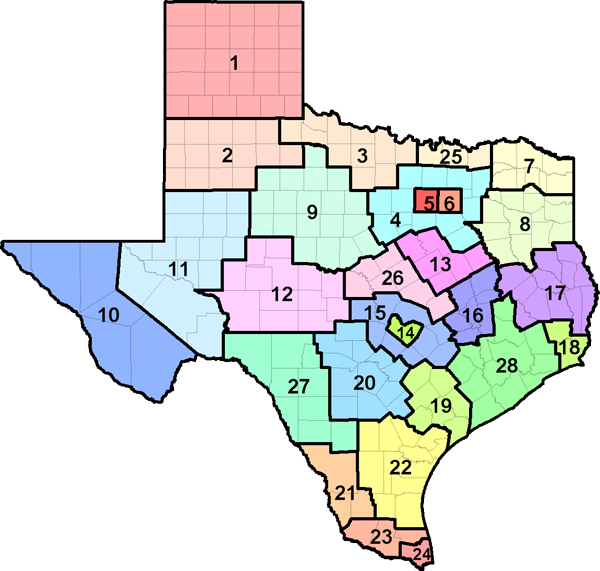
TEXAS COUNTY MAP BY WORKFORCE DEVELOPMENT AREA
* Due to confidentiality rules, not all regions may have the data displayed. The sum of all the regions may not be equal to the state total.


Top 10 Relevant Knowledge Areas Relevant Importance Levels
Communications and Media
Knowledge of media production, communication, and dissemination techniques and methods. This includes alternative ways to inform and entertain via written, oral, and visual media.
98.80%
English Language
Knowledge of the structure and content of the English language including the meaning and spelling of words, rules of composition, and grammar.
91.80%
Computers and Electronics
Knowledge of circuit boards, processors, chips, electronic equipment, and computer hardware and software, including applications and programming.
90.20%
Telecommunications
Knowledge of transmission, broadcasting, switching, control, and operation of telecommunications systems.
82.40%
Fine Arts
Knowledge of the theory and techniques required to compose, produce, and perform works of music, dance, visual arts, drama, and sculpture.
81.00%
Production and Processing
Knowledge of raw materials, production processes, quality control, costs, and other techniques for maximizing the effective manufacture and distribution of goods.
74.00%
Customer and Personal Service
Knowledge of principles and processes for providing customer and personal services. This includes customer needs assessment, meeting quality standards for services, and evaluation of customer satisfaction.
68.80%
Engineering and Technology
Knowledge of the practical application of engineering science and technology. This includes applying principles, techniques, procedures, and equipment to the design and production of various goods and services.
66.80%
Administration and Management
Knowledge of business and management principles involved in strategic planning, resource allocation, human resources modeling, leadership technique, production methods, and coordination of people and resources.
65.60%
Design
Knowledge of design techniques, tools, and principles involved in production of precision technical plans, blueprints, drawings, and models.
64.80%


Top 10 Relevant Skill Areas Relevant Importance Levels
Active Listening
Giving full attention to what other people are saying, taking time to understand the points being made, asking questions as appropriate, and not interrupting at inappropriate times.
75.00%
Critical Thinking
Using logic and reasoning to identify the strengths and weaknesses of alternative solutions, conclusions, or approaches to problems.
70.00%
Reading Comprehension
Understanding written sentences and paragraphs in work-related documents.
67.60%
Active Learning
Understanding the implications of new information for both current and future problem-solving and decision-making.
65.00%
Speaking
Talking to others to convey information effectively.
65.00%
Complex Problem Solving
Identifying complex problems and reviewing related information to develop and evaluate options and implement solutions.
65.00%
Writing
Communicating effectively in writing as appropriate for the needs of the audience.
62.40%
Judgment and Decision Making
Considering the relative costs and benefits of potential actions to choose the most appropriate one.
62.40%
Time Management
Managing one's own time and the time of others.
62.40%
Monitoring
Monitoring/Assessing performance of yourself, other individuals, or organizations to make improvements or take corrective action.
60.00%


Top 10 Relevant Abilities Relevant Importance Levels
Oral Comprehension
The ability to listen to and understand information and ideas presented through spoken words and sentences.
77.60%
Near Vision
The ability to see details at close range (within a few feet of the observer).
77.60%
Oral Expression
The ability to communicate information and ideas in speaking so others will understand.
75.00%
Information Ordering
The ability to arrange things or actions in a certain order or pattern according to a specific rule or set of rules (e.g., patterns of numbers, letters, words, pictures, mathematical operations).
75.00%
Written Comprehension
The ability to read and understand information and ideas presented in writing.
72.40%
Fluency of Ideas
The ability to come up with a number of ideas about a topic (the number of ideas is important, not their quality, correctness, or creativity).
72.40%
Visualization
The ability to imagine how something will look after it is moved around or when its parts are moved or rearranged.
72.40%
Originality
The ability to come up with unusual or clever ideas about a given topic or situation, or to develop creative ways to solve a problem.
70.00%
Speech Clarity
The ability to speak clearly so others can understand you.
70.00%
Speech Recognition
The ability to identify and understand the speech of another person.
67.60%


  • Working with Computers
    -- Using computers and computer systems (including hardware and software) to program, write software, set up functions, enter data, or process information.
  • Thinking Creatively
    -- Developing, designing, or creating new applications, ideas, relationships, systems, or products, including artistic contributions.
  • Getting Information
    -- Observing, receiving, and otherwise obtaining information from all relevant sources.
  • Updating and Using Relevant Knowledge
    -- Keeping up-to-date technically and applying new knowledge to your job.
  • Identifying Objects, Actions, and Events
    -- Identifying information by categorizing, estimating, recognizing differences or similarities, and detecting changes in circumstances or events.
Other Activities


  • Achievement
    - Occupations that satisfy this work value are results oriented and allow employees to use their strongest abilities, giving them a feeling of accomplishment. Corresponding needs are Ability Utilization and Achievement.
  • Independence
    - Occupations that satisfy this work value allow employees to work on their own and make decisions. Corresponding needs are Creativity, Responsibility and Autonomy.


Tools

Desktop computers: Desktop computers;

Digital video disk players or recorders: Digital video disk DVD recorders;

Media control systems: Video patch bays; Audio patch bays;

Network routers: Network routers;

Notebook computers: Laptop computers;

Personal computers: Personal computers;

Video editors: Digital video editing systems;

Video streaming system: YouTube.com;


Technology

Computer aided design CAD software: Autodesk Maya;

Enterprise application integration software: Extensible markup language XML;

Filesystem software: Apple Xsan;

Graphics or photo imaging software: Adobe Illustrator; Adobe Photoshop; Adobe After Effects; Adobe Creative Cloud software;

Internet browser software: Web browser software;

Music or sound editing software: Avid Digidesign Pro Tools;

Office suite software: Microsoft Office software;

Presentation software: Microsoft PowerPoint;

Project management software: Project management software;

Spreadsheet software: Microsoft Excel;

Video creation and editing software: Windows Media Services; YouTube; Screencastify; Sorenson Media Sorenson Squeeze; TikTok; Video editing software; Avid Technology audio visual editing software; Boris FX Continuum Complete; DaVinci Resolve; Autodesk Smoke; Adobe Director; Apple DVD Studio Pro; Apple Final Cut Pro; Apple QuickTime; Adobe Premiere Pro;

Web page creation and editing software: Brightcove; Google Video; Instagram;

Web platform development software: JavaScript; Hypertext markup language HTML; RSS; Cascading style sheets CSS; AJAX;

Word processing software: Microsoft Word;


Related O*NET occupational titles for Film and Video Editors include:
  • 27-4011.00 Audio and Video Technicians
  • 27-4031.00 Camera Operators, Television, Video, and Film
  • 43-9031.00 Desktop Publishers
  • 27-3041.00 Editors
  • 27-1024.00 Graphic Designers
  • 27-2012.05 Media Technical Directors/Managers
  • 27-2012.00 Producers and Directors
  • 43-9081.00 Proofreaders and Copy Markers
  • 27-4014.00 Sound Engineering Technicians
  • 27-1014.00 Special Effects Artists and Animators


Sources of Additional Information
  • For more information about film and video editors and camera operators, visit: Motion Picture Editors Guild
  • Camera Operators, Television, Video, and Film
  • Film and Video Editors

  • Contact Texas Workforce Commission
    Labor Market and Career Information  |  101 E. 15th Street, Annex Room 0252  |  Austin, Texas 78778
    Official Website  |  1-800-822-PLAN (7526)  |  512.936.3200

    ** The information in this report may be derived from many sources like O*NET, BLS (Bureau of Labor Statistics), OOH (Occupational Outlook Handbook), and Career One Stop.