Occupation Summary

Detectives and Criminal Investigators

O*NET 33-3021.00

Description:

Conduct investigations related to suspected violations of federal, state, or local laws to prevent or solve crimes.

Annual Wages:
$91,252.00
Employment Rate:
Employment is expected to increase by 7.13%.
Education Level:
High School Diploma - or the equivalent (for example, GED). According to O*Net, the majority of people employed in this occupation have this level of education.
Endorsement:
Public Service

  1. Check victims for signs of life, such as breathing and pulse.
  2. Obtain facts or statements from complainants, witnesses, and accused persons and record interviews, using recording device.
  3. Secure deceased body and obtain evidence from it, preventing bystanders from tampering with it prior to medical examiner's arrival.
  4. Record progress of investigation, maintain informational files on suspects, and submit reports to commanding officer or magistrate to authorize warrants.
  5. Prepare charges or responses to charges, or information for court cases, according to formalized procedures.
  6. Preserve, process, and analyze items of evidence obtained from crime scenes and suspects, placing them in proper containers and destroying evidence no longer needed.
  7. Obtain summary of incident from officer in charge at crime scene, taking care to avoid disturbing evidence.
  8. Note, mark, and photograph location of objects found, such as footprints, tire tracks, bullets and bloodstains, and take measurements of the scene.
  9. Prepare reports that detail investigation findings.
  10. Examine records and governmental agency files to find identifying data about suspects.
  11. Secure persons at scene, keeping witnesses from conversing or leaving the scene before investigators arrive.
  12. Provide information to lab personnel concerning the source of an item of evidence and tests to be performed.
  13. Analyze completed police reports to determine what additional information and investigative work is needed.
  14. Obtain and verify evidence by interviewing and observing suspects and witnesses or by analyzing records.
  15. Prepare and serve search and arrest warrants.
  16. Question individuals or observe persons and establishments to confirm information given to patrol officers.
  17. Identify case issues and evidence needed, based on analysis of charges, complaints, or allegations of law violations.
  18. Participate or assist in raids and arrests.
  19. Organize scene search, assigning specific tasks and areas of search to individual officers and obtaining adequate lighting as necessary.
  20. Summon medical help for injured individuals and alert medical personnel to take statements from them.
  21. Notify command of situation and request assistance.
  22. Testify before grand juries concerning criminal activity investigations.
  23. Block or rope off scene and check perimeter to ensure that entire scene is secured.
  24. Notify, or request notification of, medical examiner or district attorney representative.
  25. Search for and collect evidence, such as fingerprints, using investigative equipment.
  26. Determine scope, timing, and direction of investigations.
  27. Maintain surveillance of establishments to obtain identifying information on suspects.
  28. Collaborate with other offices and agencies to exchange information and coordinate activities.
  29. Perform undercover assignments and maintain surveillance, including monitoring authorized wiretaps.
  30. Examine records to locate links in chains of evidence or information.


No Industry Employment Patterns found.

Labor Market Information


2024 Statewide average hourly wage $43.87
2024 National average hourly wage $47.48
2022 National employment 114,400
2022 Texas employment 18,762
Texas projected employment by 2032 20,099
Texas projected annual employment and Turnover openings through 2032 1,555


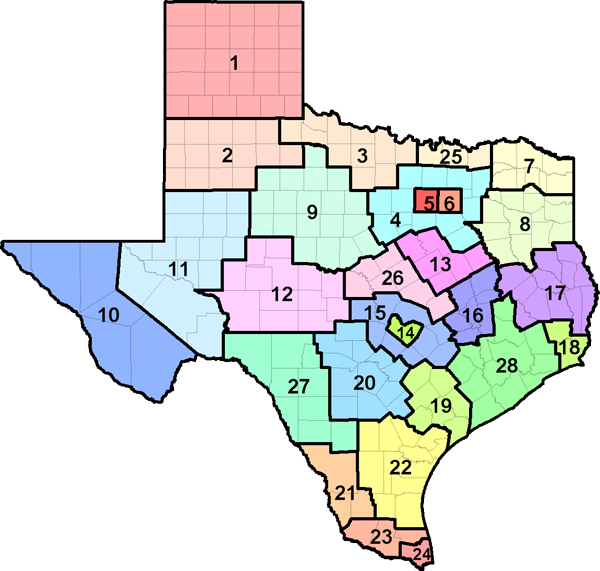
TEXAS COUNTY MAP BY WORKFORCE DEVELOPMENT AREA
* Due to confidentiality rules, not all regions may have the data displayed. The sum of all the regions may not be equal to the state total.


Top 10 Relevant Knowledge Areas Relevant Importance Levels
Law and Government
Knowledge of laws, legal codes, court procedures, precedents, government regulations, executive orders, agency rules, and the democratic political process.
96.80%
Public Safety and Security
Knowledge of relevant equipment, policies, procedures, and strategies to promote effective local, state, or national security operations for the protection of people, data, property, and institutions.
92.20%
English Language
Knowledge of the structure and content of the English language including the meaning and spelling of words, rules of composition, and grammar.
83.60%
Customer and Personal Service
Knowledge of principles and processes for providing customer and personal services. This includes customer needs assessment, meeting quality standards for services, and evaluation of customer satisfaction.
80.40%
Psychology
Knowledge of human behavior and performance; individual differences in ability, personality, and interests; learning and motivation; psychological research methods; and the assessment and treatment of behavioral and affective disorders.
77.40%
Computers and Electronics
Knowledge of circuit boards, processors, chips, electronic equipment, and computer hardware and software, including applications and programming.
71.40%
Education and Training
Knowledge of principles and methods for curriculum and training design, teaching and instruction for individuals and groups, and the measurement of training effects.
71.20%
Administrative
Knowledge of administrative and office procedures and systems such as word processing, managing files and records, stenography and transcription, designing forms, and workplace terminology.
70.80%
Administration and Management
Knowledge of business and management principles involved in strategic planning, resource allocation, human resources modeling, leadership technique, production methods, and coordination of people and resources.
66.80%
Communications and Media
Knowledge of media production, communication, and dissemination techniques and methods. This includes alternative ways to inform and entertain via written, oral, and visual media.
63.60%


Top 10 Relevant Skill Areas Relevant Importance Levels
Active Listening
Giving full attention to what other people are saying, taking time to understand the points being made, asking questions as appropriate, and not interrupting at inappropriate times.
87.60%
Speaking
Talking to others to convey information effectively.
85.00%
Critical Thinking
Using logic and reasoning to identify the strengths and weaknesses of alternative solutions, conclusions, or approaches to problems.
82.40%
Reading Comprehension
Understanding written sentences and paragraphs in work-related documents.
77.60%
Social Perceptiveness
Being aware of others' reactions and understanding why they react as they do.
77.60%
Complex Problem Solving
Identifying complex problems and reviewing related information to develop and evaluate options and implement solutions.
77.60%
Judgment and Decision Making
Considering the relative costs and benefits of potential actions to choose the most appropriate one.
75.00%
Service Orientation
Actively looking for ways to help people.
70.00%
Coordination
Adjusting actions in relation to others' actions.
70.00%
Active Learning
Understanding the implications of new information for both current and future problem-solving and decision-making.
70.00%


Top 10 Relevant Abilities Relevant Importance Levels
Oral Comprehension
The ability to listen to and understand information and ideas presented through spoken words and sentences.
87.60%
Inductive Reasoning
The ability to combine pieces of information to form general rules or conclusions (includes finding a relationship among seemingly unrelated events).
87.60%
Problem Sensitivity
The ability to tell when something is wrong or is likely to go wrong. It does not involve solving the problem, only recognizing that there is a problem.
82.40%
Deductive Reasoning
The ability to apply general rules to specific problems to produce answers that make sense.
82.40%
Oral Expression
The ability to communicate information and ideas in speaking so others will understand.
82.40%
Written Comprehension
The ability to read and understand information and ideas presented in writing.
80.00%
Information Ordering
The ability to arrange things or actions in a certain order or pattern according to a specific rule or set of rules (e.g., patterns of numbers, letters, words, pictures, mathematical operations).
77.60%
Near Vision
The ability to see details at close range (within a few feet of the observer).
77.60%
Speech Recognition
The ability to identify and understand the speech of another person.
77.60%
Speech Clarity
The ability to speak clearly so others can understand you.
77.60%


  • Getting Information
    -- Observing, receiving, and otherwise obtaining information from all relevant sources.
  • Communicating with Supervisors, Peers, or Subordinates
    -- Providing information to supervisors, co-workers, and subordinates by telephone, in written form, e-mail, or in person.
  • Making Decisions and Solving Problems
    -- Analyzing information and evaluating results to choose the best solution and solve problems.
  • Documenting/Recording Information
    -- Entering, transcribing, recording, storing, or maintaining information in written or electronic/magnetic form.
  • Performing for or Working Directly with the Public
    -- Performing for people or dealing directly with the public. This includes serving customers in restaurants and stores, and receiving clients or guests.
Other Activities


  • Achievement
    - Occupations that satisfy this work value are results oriented and allow employees to use their strongest abilities, giving them a feeling of accomplishment. Corresponding needs are Ability Utilization and Achievement.
  • Working Conditions
    - Occupations that satisfy this work value offer job security and good working conditions. Corresponding needs are Activity, Compensation, Independence, Security, Variety and Working Conditions.


Tools

Alcohol analyzers: Breathalyzers;

Binocular light compound microscopes: Compound light microscopes;

Biological evidence collection kits: Blood collection kits; Deoxyribonucleic acid DNA collection kits;

Body armour: Body armor;

Bullet proof vests: Bulletproof vests;

Desktop computers: Desktop computers;

Dictation machines: Voice dictation equipment;

Digital camcorders or video cameras: Digital video cameras;

Digital cameras: Digital cameras;

Fingerprint equipment: Suspect fingerprinting equipment;

Fingerprint latent print kits: Fingerprint evidence kits;

Flares: Road flares;

Footprint lifters: Impression casting kits; Electrostatic dust lifters;

Footwear covers: Footwear protectors;

Gas generators: Power generators;

Goggles: Safety goggles;

Hand sprayers: Pepper spray;

Handcuffs: Plastic handcuffs; Metal handcuffs;

Handguns: Semiautomatic pistols; Service revolvers;

Hazardous material protective apparel: Biohazard suits;

Infrared lamps: Infrared light sources;

Instant print cameras: Instant print cameras;

Lasers: Laser light sources;

Masks or accessories: Filter masks;

Measuring wheels for distance: Distance measuring wheels;

Metal detectors: Metal detectors;

Military rifles: Police rifles;

Mobile medical services automated external defibrillators AED or hard paddles: Automated external defibrillators AED;

Mobile medical services first aid kits: First aid kits;

Narcotic test kits: Drug testing kits;

Night sticks: Nightsticks;

Notebook computers: Laptop computers; Mobile data computers;

Personal computers: Personal computers;

Physiological recorders: Voice stress analyzers; Polygraphs;

Police or security shotguns: Police shotguns;

Police vehicles: Police patrol cars;

Protective gloves: Protective gloves;

Radarbased surveillance systems: Radar speed readers;

Riot batons: Side-handle batons;

Riot helmets: Riot helmets;

Riot shields: Riot shields;

Rulers: Crime scene rulers;

Still cameras: 35 millimeter cameras;

Surveillance video or audio recorders: Wiretap equipment; Audio recording equipment; Digital voice recorders; Digital tape recorders;

Tape measures: Crime scene tape measures;

Two way radios: Two way radios;

Ultraviolet UV lamps: Ultraviolet UV lights;

Weapon or explosives detectors and supplies: Explosive detectors;


Technology

Analytical or scientific software: Guidance Software EnCase Enterprise; SAS;

Data base user interface and query software: National Crime Information Center (NCIC) database; National Integrated Ballistics Information Network NIBIN; Structured query language SQL; Microsoft Access; Integrated Automated Fingerprint Identification System IAFIS; Law enforcement information databases; DataWorks Plus Digital CrimeScene;

Desktop publishing software: Microsoft Publisher;

Electronic mail software: Microsoft Outlook; Email software;

Geographic information system: ESRI ArcView; Geographic information system GIS software;

Graphics or photo imaging software: Graphics software; The CAD Zone The Crime Zone; Trancite Logic Systems ScenePD; Visual Statement Vista FX3 CSI; SmartDraw Legal; Eos Systems PhotoModeler; DeChant Consulting Services iWitness; DesignWare 3D EyeWitness; Digital Image Management Solutions Crime Scene; Adobe Photoshop; Computer aided composite drawing software;

Internet browser software: Web browser software;

Map creation software: Crime mapping software;

Network monitoring software: AccessData FTK;

Office suite software: Corel WordPerfect Office Suite; Microsoft Office software;

Operating system software: Linux; Operating system software;

Presentation software: Microsoft PowerPoint;

Process mapping and design software: Microsoft Visio;

Project management software: Case management software;

Spreadsheet software: Microsoft Excel; Spreadsheet software;

Word processing software: Microsoft Word;


Related O*NET occupational titles for Detectives and Criminal Investigators include:
  • 13-1041.06 Coroners
  • 33-1012.00 First-Line Supervisors of Police and Detectives
  • 19-4092.00 Forensic Science Technicians
  • 13-2099.04 Fraud Examiners, Investigators and Analysts
  • 33-3021.06 Intelligence Analysts
  • 33-3051.00 Police and Sheriff's Patrol Officers
  • 33-3021.02 Police Identification and Records Officers
  • 33-9021.00 Private Detectives and Investigators
  • 21-1092.00 Probation Officers and Correctional Treatment Specialists
  • 33-3052.00 Transit and Railroad Police

Contact Texas Workforce Commission
Labor Market and Career Information  |  101 E. 15th Street, Annex Room 0252  |  Austin, Texas 78778
Official Website  |  1-800-822-PLAN (7526)  |  512.936.3200

** The information in this report may be derived from many sources like O*NET, BLS (Bureau of Labor Statistics), OOH (Occupational Outlook Handbook), and Career One Stop.