Occupation Summary

Intelligence Analysts

O*NET 33-3021.06

Description:

Gather, analyze, or evaluate information from a variety of sources, such as law enforcement databases, surveillance, intelligence networks or geographic information systems. Use intelligence data to anticipate and prevent organized crime activities, such as terrorism.

Annual Wages:
$91,252.00
Employment Rate:
Employment is expected to increase by 7.13%.
Education Level:
Bachelor's Degree. According to O*Net, the majority of people employed in this occupation have this level of education.
Endorsement:
Public Service

  1. Predict future gang, organized crime, or terrorist activity, using analyses of intelligence data.
  2. Study activities relating to narcotics, money laundering, gangs, auto theft rings, terrorism, or other national security threats.
  3. Design, use, or maintain databases and software applications, such as geographic information systems (GIS) mapping and artificial intelligence tools.
  4. Establish criminal profiles to aid in connecting criminal organizations with their members.
  5. Evaluate records of communications, such as telephone calls, to plot activity and determine the size and location of criminal groups and members.
  6. Gather and evaluate information, using tools such as aerial photographs, radar equipment, or sensitive radio equipment.
  7. Gather intelligence information by field observation, confidential information sources, or public records.
  8. Gather, analyze, correlate, or evaluate information from a variety of resources, such as law enforcement databases.
  9. Link or chart suspects to criminal organizations or events to determine activities and interrelationships.
  10. Operate cameras, radios, or other surveillance equipment to intercept communications or document activities.
  11. Prepare comprehensive written reports, presentations, maps, or charts, based on research, collection, and analysis of intelligence data.
  12. Prepare plans to intercept foreign communications transmissions.
  13. Study the assets of criminal suspects to determine the flow of money from or to targeted groups.
  14. Validate known intelligence with data from other sources.
  15. Collaborate with representatives from other government and intelligence organizations to share information or coordinate intelligence activities.
  16. Develop defense plans or tactics, using intelligence and other information.
  17. Interview, interrogate, or interact with witnesses or crime suspects to collect human intelligence.
  18. Study communication code languages or foreign languages to translate intelligence.
  19. Analyze intelligence data to identify patterns and trends in criminal activity.
  20. Conduct presentations of analytic findings.
  21. Identify gaps in information.


No Industry Employment Patterns found.

Labor Market Information


2024 Statewide average hourly wage $43.87
2024 National average hourly wage $47.48
2022 National employment 114,400
2022 Texas employment 18,762
Texas projected employment by 2032 20,099
Texas projected annual employment and Turnover openings through 2032 1,555


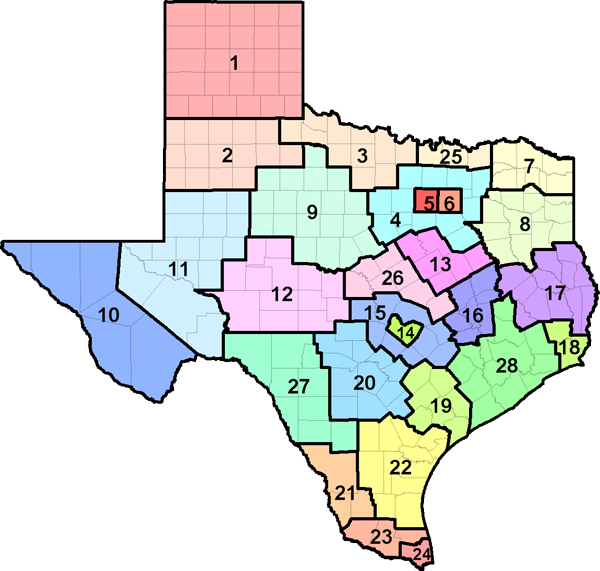
TEXAS COUNTY MAP BY WORKFORCE DEVELOPMENT AREA
* Due to confidentiality rules, not all regions may have the data displayed. The sum of all the regions may not be equal to the state total.


Top 10 Relevant Knowledge Areas Relevant Importance Levels
English Language
Knowledge of the structure and content of the English language including the meaning and spelling of words, rules of composition, and grammar.
85.20%
Law and Government
Knowledge of laws, legal codes, court procedures, precedents, government regulations, executive orders, agency rules, and the democratic political process.
82.80%
Public Safety and Security
Knowledge of relevant equipment, policies, procedures, and strategies to promote effective local, state, or national security operations for the protection of people, data, property, and institutions.
75.60%
Computers and Electronics
Knowledge of circuit boards, processors, chips, electronic equipment, and computer hardware and software, including applications and programming.
69.60%
Administrative
Knowledge of administrative and office procedures and systems such as word processing, managing files and records, stenography and transcription, designing forms, and workplace terminology.
69.60%
Communications and Media
Knowledge of media production, communication, and dissemination techniques and methods. This includes alternative ways to inform and entertain via written, oral, and visual media.
65.20%
Customer and Personal Service
Knowledge of principles and processes for providing customer and personal services. This includes customer needs assessment, meeting quality standards for services, and evaluation of customer satisfaction.
63.40%
Telecommunications
Knowledge of transmission, broadcasting, switching, control, and operation of telecommunications systems.
62.60%
Education and Training
Knowledge of principles and methods for curriculum and training design, teaching and instruction for individuals and groups, and the measurement of training effects.
54.80%
Mathematics
Knowledge of arithmetic, algebra, geometry, calculus, statistics, and their applications.
54.00%


Top 10 Relevant Skill Areas Relevant Importance Levels
Reading Comprehension
Understanding written sentences and paragraphs in work-related documents.
85.00%
Active Listening
Giving full attention to what other people are saying, taking time to understand the points being made, asking questions as appropriate, and not interrupting at inappropriate times.
82.40%
Writing
Communicating effectively in writing as appropriate for the needs of the audience.
80.00%
Speaking
Talking to others to convey information effectively.
80.00%
Critical Thinking
Using logic and reasoning to identify the strengths and weaknesses of alternative solutions, conclusions, or approaches to problems.
80.00%
Active Learning
Understanding the implications of new information for both current and future problem-solving and decision-making.
72.40%
Complex Problem Solving
Identifying complex problems and reviewing related information to develop and evaluate options and implement solutions.
72.40%
Monitoring
Monitoring/Assessing performance of yourself, other individuals, or organizations to make improvements or take corrective action.
65.00%
Coordination
Adjusting actions in relation to others' actions.
62.40%
Judgment and Decision Making
Considering the relative costs and benefits of potential actions to choose the most appropriate one.
62.40%


Top 10 Relevant Abilities Relevant Importance Levels
Inductive Reasoning
The ability to combine pieces of information to form general rules or conclusions (includes finding a relationship among seemingly unrelated events).
85.00%
Oral Comprehension
The ability to listen to and understand information and ideas presented through spoken words and sentences.
82.40%
Written Comprehension
The ability to read and understand information and ideas presented in writing.
82.40%
Problem Sensitivity
The ability to tell when something is wrong or is likely to go wrong. It does not involve solving the problem, only recognizing that there is a problem.
82.40%
Deductive Reasoning
The ability to apply general rules to specific problems to produce answers that make sense.
80.00%
Oral Expression
The ability to communicate information and ideas in speaking so others will understand.
80.00%
Written Expression
The ability to communicate information and ideas in writing so others will understand.
80.00%
Information Ordering
The ability to arrange things or actions in a certain order or pattern according to a specific rule or set of rules (e.g., patterns of numbers, letters, words, pictures, mathematical operations).
80.00%
Speech Recognition
The ability to identify and understand the speech of another person.
80.00%
Speech Clarity
The ability to speak clearly so others can understand you.
80.00%


  • Communicating with Supervisors, Peers, or Subordinates
    -- Providing information to supervisors, co-workers, and subordinates by telephone, in written form, e-mail, or in person.
  • Working with Computers
    -- Using computers and computer systems (including hardware and software) to program, write software, set up functions, enter data, or process information.
  • Getting Information
    -- Observing, receiving, and otherwise obtaining information from all relevant sources.
  • Processing Information
    -- Compiling, coding, categorizing, calculating, tabulating, auditing, or verifying information or data.
  • Analyzing Data or Information
    -- Identifying the underlying principles, reasons, or facts of information by breaking down information or data into separate parts.
Other Activities


  • Achievement
    - Occupations that satisfy this work value are results oriented and allow employees to use their strongest abilities, giving them a feeling of accomplishment. Corresponding needs are Ability Utilization and Achievement.
  • Working Conditions
    - Occupations that satisfy this work value offer job security and good working conditions. Corresponding needs are Activity, Compensation, Independence, Security, Variety and Working Conditions.


Tools

Desktop computers: Desktop computers;

Digital camcorders or video cameras: Digital video cameras;

Digital cameras: Digital still cameras;

Laser fax machine: Laser facsimile machines;

Laser printers: Color laser printers; Computer laser printers;

Mobile phones: Smart phones;

Multimedia projectors: Multimedia presentation projectors;

Notebook computers: Laptop computers;

Photocopiers: Color copiers;

Plotter printers: Plotting printers;

Scanners: Document scanners;

Scientific calculator: Statistical calculators;


Technology

Analytical or scientific software: Data visualization software; Link analysis software; SAS; Statistical analysis software; Telephone analysis software;

Backup or archival software: Veritas NetBackup;

Business intelligence and data analysis software: Tableau; Oracle Business Intelligence Enterprise Edition; Apache Spark;

Charting software: Timeline software;

Cloud-based data access and sharing software: Microsoft SharePoint;

Cloud-based management software: Google Cloud software; Splunk Enterprise;

Data base management system software: Teradata Database; Apache Hadoop; Apache Hive; Apache Pig; Relational database management software;

Data base user interface and query software: Refugee, Asylum and Parole System RAPS; Structured query language SQL; Student and Exchange Visitor Information System SEVIS; Palantir Intelligence; Microsoft SQL Server; National Crime Information Center (NCIC) database; Microsoft Access; Computer Linked Application Information Management System CLAIMS; Consular Consolidated Database CCD; Amazon Web Services AWS software; Arrival Departure Information System ADIS; Automated Targeting System ATS; Bing; Biometric Storage System BSS; IBM i2 Analyst's Notebook; Google; Enforcement Case Tracking System ENFORCE; Treasury Enforcement Communications System TECS; Telephone records software; Thomson Reuters CLEAR;

Data mining software: Text mining software; Data mining software;

Development environment software: Apache Kafka; Microsoft Azure software; Microsoft PowerShell;

Electronic mail software: Microsoft Outlook; Email software;

Enterprise resource planning ERP software: Oracle PeopleSoft; SAP software;

Geographic information system: ESRI ArcGIS software; ESRI ArcView; Geographic information system GIS software; Geographic information system GIS systems; Google Earth Pro;

Graphics or photo imaging software: Graphics creation software; Photo enhancement software; Microsoft Visio;

Industrial control software: Chatbot software; TensorFlow;

Information retrieval or search software: LexisNexis;

Internet browser software: Web browser software;

Network monitoring software: Wireshark; Snort;

Network security and virtual private network VPN equipment software: Firewall software;

Object or component oriented development software: C++; Python; R; Oracle Java;

Office suite software: Microsoft Office software;

Operating system software: Linux; Operating system software; UNIX;

Presentation software: Microsoft PowerPoint;

Process mapping and design software: Flowcharting software;

Spreadsheet software: Microsoft Excel;

Storage networking software: Amazon Simple Storage Service S3;

Transaction security and virus protection software: Encryption software; McAfee; NortonLifeLock cybersecurity software;

Web page creation and editing software: LinkedIn; Myspace; Facebook;

Web platform development software: JavaScript; Hypertext markup language HTML; Django;

Word processing software: Microsoft Word;


Related O*NET occupational titles for Intelligence Analysts include:
  • 15-2051.01 Business Intelligence Analysts
  • 15-2051.00 Data Scientists
  • 33-3021.00 Detectives and Criminal Investigators
  • 19-4092.00 Forensic Science Technicians
  • 13-2099.04 Fraud Examiners, Investigators and Analysts
  • 15-1212.00 Information Security Analysts
  • 15-1299.05 Information Security Engineers
  • 15-1299.04 Penetration Testers
  • 33-9021.00 Private Detectives and Investigators
  • 13-1199.07 Security Management Specialists

Contact Texas Workforce Commission
Labor Market and Career Information  |  101 E. 15th Street, Annex Room 0252  |  Austin, Texas 78778
Official Website  |  1-800-822-PLAN (7526)  |  512.936.3200

** The information in this report may be derived from many sources like O*NET, BLS (Bureau of Labor Statistics), OOH (Occupational Outlook Handbook), and Career One Stop.